
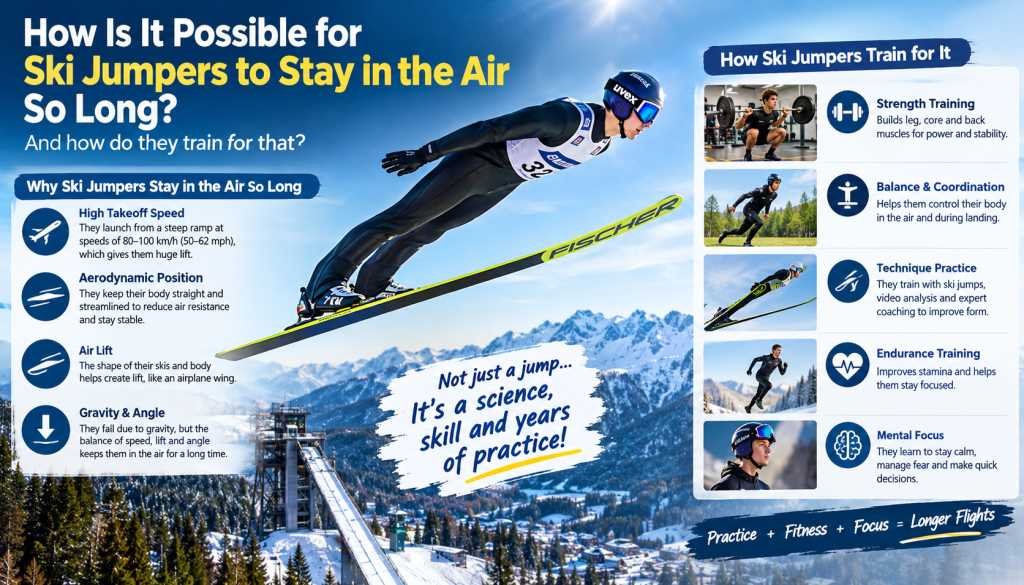
how is it possible for ski jumpers to stay in the air so long and how do they train for that?
Introduction: Why Ski Jumpers Seem to Float in the Air
Ski jumpers look like they are flying, but they are not breaking any laws of physics. They use smart body positions, high speed, and special hills to stay in the air longer. Many people search online with the keyword “how is it possible for ski jumpers to stay in the air so long and how do they train for that?” because the sport looks magical. At SevenSevenTech.in, we believe clear answers help readers learn faster and trust good content. In this article, you will get simple facts about flight, training, gear, and myths. You will also see how normal people can learn from these elite athletes. The goal is to explain everything in easy words so anyone can understand.
The Physics Behind Long Ski Jumps
Gravity still pulls ski jumpers down, just like everyone else. The trick is to create enough lift to slow the fall and stretch the jump. Lift is an upward force made when air moves around a shape. Ski jumpers turn their body and skis into a wing. This wing shape pushes air down, and the air pushes them up. Drag is the force that tries to slow them down. Good jumpers keep drag low while keeping lift high. This balance lets them travel far before landing. The result is a long, smooth arc through the air.
How Is It Possible for Ski Jumpers to Stay in the Air So Long?
The short answer is: aerodynamics plus speed plus technique. When jumpers leave the table, they are moving very fast. They then lean forward and spread their skis in a V. This creates a large surface for the air to push against. Their body angle is tuned so lift is strong but they do not stall. Small changes in posture can add or lose many meters. Wind also plays a role, but rules limit how much it can help.
So the main reason is human skill, not magic or wind tricks. This is why the question “how is it possible for ski jumpers to stay in the air so long and how do they train for that?” makes sense. People want to know the real science behind the long flight.
Quick Reference Table: Key Factors in Long Ski Jumps
| Factor | What It Does | Why It Matters |
|---|---|---|
| Body position (V‑style) | Creates lift like a wing | Longer, steadier flight |
| Takeoff speed | Gives horizontal momentum | Flatter, farther arc |
| Hill profile | Matches safe flight path | More air time before landing |
| Equipment (skis, suit) | Optimizes lift within rules | Fair but effective performance |
| Training (gym + snow) | Builds power, balance, skill | Repeatable long jumps |
| Mental focus | Handles wind and pressure | Consistent performance in events |
This table gives a fast overview of the main ideas in this article. Use it as a checklist when you study or write about ski jumping.
Aerodynamics of the V‑Style: Body Position and Ski Angle
Modern ski jumping uses the V‑style, where skis form a wide V in the air. This shape gives more lift than the old parallel style. Jumpers keep their chest close to their thighs and their arms out a bit. This makes the whole body act like one big wing. The angle between the skis and the body is carefully controlled. Too wide can cause instability. Too narrow loses lift. Coaches use video and wind tunnels to find the best pose for each athlete. The key is a stable, repeatable position that works in many wind conditions. This is a big part of the answer to how ski jumpers stay in the air so long.
The Role of the In‑Run and Takeoff Speed
The in‑run is the steep ramp that leads to the jump table. Jumpers crouch low to reduce drag and gain speed. By the time they reach the edge, they are moving around 90–100 km/h. This high speed gives them a long, flat path through the air. The takeoff must be explosive but smooth. A weak takeoff wastes speed. A late or early takeoff ruins the angle. Good jumpers time their push perfectly to convert speed into lift. This moment is critical for long jumps. Without a strong in‑run and clean takeoff, even perfect air form cannot save the jump.
Hill Design, K‑Point, and Flight Distance Explained
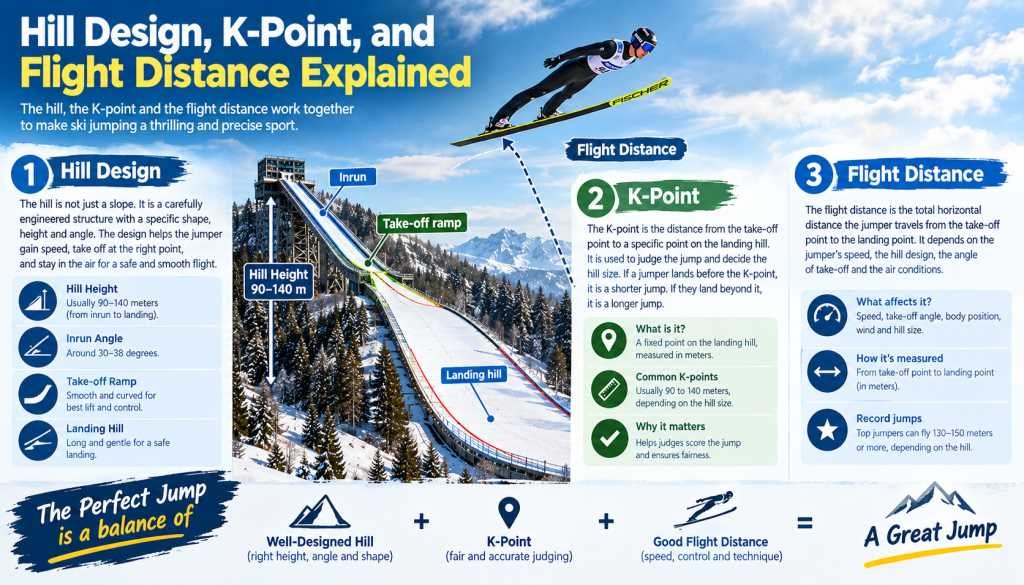
Ski jumping hills are built to exact standards. Each hill has a K‑point, which is the target distance for a good jump. Jumping beyond the K‑point earns extra points. The hill profile is curved to match a safe flight path. This helps jumpers stay in the air longer without hitting the ground too soon. Different hill sizes exist for different levels, from small training hills to huge competition hills. The design works with physics to reward good technique. This is another reason why jumpers can fly so far. The hill, the speed, and the body all work together.
Equipment That Helps Jumpers Fly Farther
Ski jumping gear is special and tightly regulated. Skis are long, wide, and light to boost lift. Boots are fixed to the skis at a set angle for better control. Suits are made from specific fabrics and must pass air‑flow tests. This stops athletes from using “super suits” that act like parachutes. Helmets, goggles, and gloves are also designed for safety and low drag. All equipment must follow strict rules so the sport stays fair. Good gear cannot replace skill, but it helps good jumpers perform at their best. This is part of the full picture behind how ski jumpers stay in the air so long.
How Do They Train for That? A Complete Training Breakdown
Training for ski jumping is intense and year‑round. Athletes mix on‑snow jumps with gym work and mental drills. The goal is to build power, balance, and calm under pressure. Many fans ask, “how is it possible for ski jumpers to stay in the air so long and how do they train for that?” because the results look extreme. The truth is many hours of focused practice. Jumpers train their legs to explode at takeoff. They train their core to hold tough positions in the air. They also train their minds to stay sharp in wind and crowds. All of this adds up to long, stable flights.
On‑Snow Drills: From Small Hills to Large Competition Jumps
Jumpers start on small hills to learn basic form. They repeat the same movements thousands of times. This builds muscle memory for takeoff, flight, and landing. As they improve, they move to bigger hills with more speed. Coaches watch every jump and give quick feedback. Video analysis helps fix small errors in posture. Wind changes teach jumpers to adapt in real time. This step‑by‑step progress is how elite jumpers are made. Without many hours on snow, no amount of gym work can create a great jumper.
Strength, Power, and Plyometric Work for Explosive Takeoffs
In the gym, jumpers focus on leg power and speed. They do heavy squats, deadlifts, and Olympic lifts. They also do plyometrics like box jumps and depth jumps. These exercises teach muscles to fire fast and hard. This is crucial for the short, explosive push at takeoff. Upper body and back work help hold the lean in the air. But the legs are the main engine. Strong, fast legs mean more lift and longer jumps. This is a key part of the answer to how do they train for that.
Core Stability, Balance, and Flexibility for In‑Air Control
A strong core keeps the body stable in flight. Jumpers do planks, anti‑rotation drills, and balance work. They train on unstable surfaces to improve proprioception. This helps them stay calm when the air is rough. Flexibility in the hips, ankles, and spine lets them reach extreme positions safely. Tight muscles can ruin form and increase injury risk. Good mobility also helps with smooth landings. All of this supports the long, controlled flights we see on TV.
Mental Training: Visualization, Focus, and Wind Adaptation
Ski jumping is as mental as it is physical. Jumpers use visualization to rehearse perfect jumps in their mind. This builds confidence and sharpens timing. They practice staying focused despite wind, noise, and pressure. Wind can change between jumps, so they learn to adjust quickly. Coaches teach simple cues to reset before each run. Mental strength helps them trust their training in big events. This inner work is often hidden but very important. It is another piece of the puzzle behind how ski jumpers stay in the air so long.
Common Myths and Misunderstandings About Ski Jumping Flight
Many people think wind does most of the work in long jumps. In reality, wind helps but rules limit its effect. Some think jumpers use special suits to float. But suits are tested and must meet strict air‑flow limits. Others believe jumpers are much lighter than normal. Top jumpers are lean but still strong and muscular. The real secret is technique, speed, and smart training. These myths spread because the sport looks unreal. But the science is clear and well studied.
Final Thoughts: What Amateur Athletes Can Learn From Ski Jumpers
You do not need a ski jump hill to use these lessons. The ideas of power, balance, and focus apply to many sports. Build leg strength and explosive power for better performance. Train your core to stay stable under stress. Work on flexibility to move safely in extreme positions. Practice mental skills like visualization and calm breathing. These habits can improve your own training and results. The next time you see a long jump, you will know the real story. And you will have a clear answer to how is it possible for ski jumpers to stay in the air so long and how do they train for that?