

How to Identify Rosemary Plant: Easy Guide for Gardeners
Introduction: Why Correctly Identifying Rosemary Matters
Many people in India grow herbs at home for cooking and health. But some herbs look similar, and mistakes happen. That is why learning how to identify rosemary plant correctly is so useful. When you know the true signs, you avoid buying the wrong herb. You also cook with confidence and get the right flavor. On SevenSevenTech.in, we share clear guides to help you grow and use plants the right way. This article gives you a full, simple path to spot rosemary in any setting.
What Is Rosemary? A Quick Botanical Overview
Rosemary is an evergreen herb with a strong pine-like scent. Its scientific name is Salvia rosmarinus (formerly Rosmarinus officinalis). It belongs to the mint family and is native to the Mediterranean region. The plant has woody stems and needle-like leaves. People use it in cooking, teas, and natural remedies. In India, it is now common in home gardens and kitchen pots. Knowing how to identify rosemary plant starts with this basic picture of what rosemary truly is.
Where Rosemary Grows: Native Range and Global Distribution
Rosemary comes from the Mediterranean, including places like Italy, Spain, and Greece. It loves warm, dry climates and well-drained soil. Today, it grows in many parts of the world, including India, the US, and Australia. In India, it thrives in hills and cooler zones, but also does well in pots in cities. It can handle mild frost but not heavy rain or waterlogged soil. When you learn how to identify rosemary plant, keep its native habitat in mind. This helps you judge if the plant in front of you fits rosemary’s natural needs.
Key Visual Features to Identify a Rosemary Plant
The fastest way to learn how to identify rosemary plant is to study its main visual traits. Look for a bushy shrub with many woody branches. The leaves are narrow and stiff, not soft or broad. The top of the leaf is dark green, while the underside is silvery or white. Flowers, when present, are small and grow along the stem in clusters. Colors range from blue and purple to pink or white. These features together form a strong ID pattern. If most match, you likely have rosemary.
Leaf Shape, Color, and Texture: The Most Reliable Clues
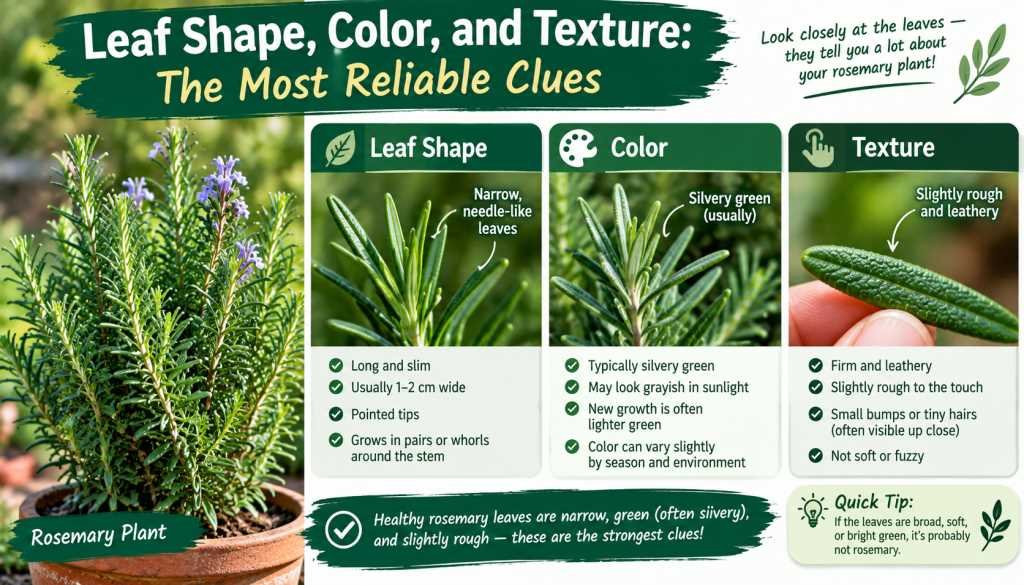
Leaves give the clearest signs when you ask how to identify rosemary plant. Rosemary leaves are needle-like, about 2–4 cm long. They feel firm and leathery, not floppy. The upper side is deep green and slightly shiny. The lower side is pale, often with a white or silver tone. Leaves grow in opposite pairs along the stem. This two-tone look is a key marker. Many fake or confused herbs lack this contrast. So, always flip a leaf to check both sides.
Stem Structure and Growth Habit: Upright vs. Trailing Types
Rosemary stems start green and soft, then turn brown and woody. Young stems may feel slightly square, a mint family trait. The plant can grow upright, forming a bush, or trail along the ground. Upright types are common in gardens. Trailing types suit hanging pots or rock edges. Both types share the same leaf and scent features. When checking how to identify rosemary plant, note the stem color and texture. Woody, peeling bark on older stems is normal and expected.
Flower Characteristics and Seasonal Blooming Patterns
Flowers help confirm identity when in season. Rosemary blooms in late winter to spring in many zones, but timing varies in India. Flowers are small, tubular, and two-lipped. They grow in tight groups along the upper stems. Colors include blue, purple, pink, or white. Not all plants flower every year, especially indoors. But if you see these blooms, it supports your ID. So, when learning how to identify rosemary plant, don’t ignore the flowers. They add another layer of proof.
The Aroma Test: Using Scent to Confirm Rosemary
Scent is one of the strongest tools for ID. To use it, pick one leaf and crush it between your fingers. Rosemary gives off a sharp, pine-like, camphor scent. This smell is bold and easy to spot. Many other herbs smell sweet, minty, or citrusy. Rosemary does not. If the aroma matches, you are on the right track. This test works even when the plant is young or not flowering. So, always include the aroma check when you study how to identify rosemary plant.
Comparison Table: Rosemary vs. Common Confused Herbs
| Feature | Rosemary | Lavender | Curry Leaf | Sage |
|---|---|---|---|---|
| Leaf Shape | Needle-like, stiff | Broader, soft | Compound, many leaflets | Broad, fuzzy |
| Leaf Color | Dark green top, white below | Gray-green all over | Green all over | Gray-green, fuzzy |
| Scent | Pine, camphor | Floral, sweet | Citrus, curry | Earthy, mild |
| Flower Pattern | Small clusters along stem | Dense spikes at stem tip | White, in loose clusters | Purple/blue, in spikes |
| Growth Habit | Woody shrub, upright/trailing | Woody shrub, upright | Small tree or shrub | Herbaceous or woody base |
This table gives you a fast reference when you compare herbs side by side. Use it with the checklist above for best results.
Rosemary vs. Common Look-Alikes in India and South Asia
In India, people sometimes mix rosemary with lavender, curry leaf, or sage. These plants can look similar at a glance. But each has clear differences. Lavender has broader, softer leaves and tall flower spikes. Curry leaf has compound leaves with many leaflets. Sage leaves are wider, fuzzy, and gray-green all over. Rosemary stands out with its needle leaves and two-tone color. Knowing these contrasts makes how to identify rosemary plant much easier in local markets or nurseries.
Lavender vs. Rosemary: Side-by-Side Identification Guide
Lavender and rosemary are often confused. Both are aromatic shrubs with purple flowers. But their leaves tell a different story. Lavender leaves are gray-green, soft, and wider. Rosemary leaves are dark green above, white below, and stiff. Lavender flowers form dense spikes at the stem tip. Rosemary flowers scatter along the stem in small clusters. Scent also differs: lavender is floral and sweet; rosemary is piney and sharp. Use these points to tell them apart with confidence.
Curry Leaf, Sage, and Other Herbs Often Confused with Rosemary
Curry leaf plants have long stems with many small leaflets. They lack the needle shape and pine scent of rosemary. Sage has broad, fuzzy leaves and a milder, earthy smell. Thyme has tiny leaves and a low, spreading habit. None match rosemary’s stiff, two-tone needles. When in doubt, do the crush-and-smell test. Rosemary’s scent is unique and strong. This step alone can clear most confusion. So, keep it in mind whenever you explore how to identify rosemary plant in Indian gardens.
Growing Conditions That Help Confirm Identity (Soil, Sun, Climate)
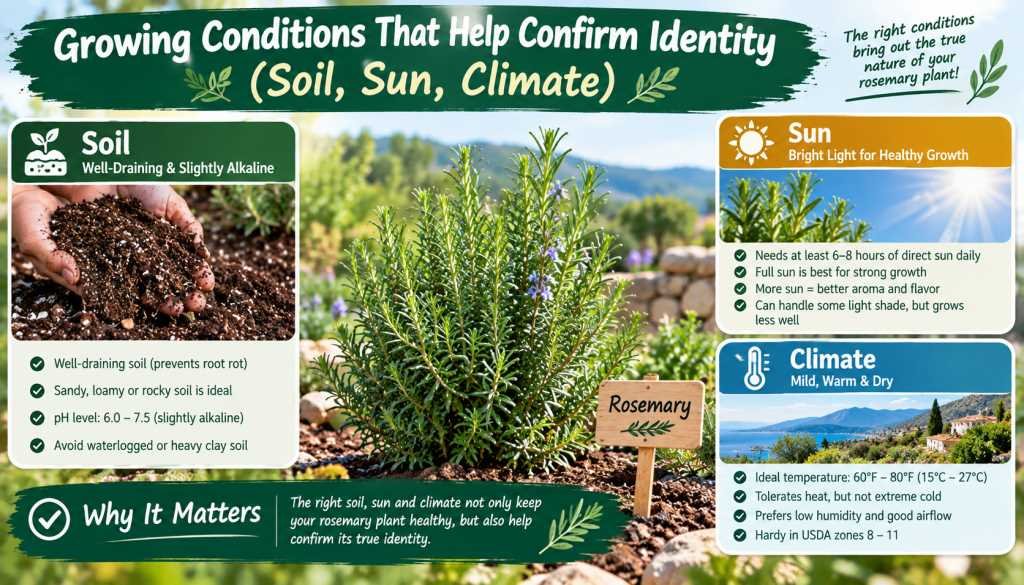
Rosemary prefers full sun and well-drained soil. It dislikes wet feet and heavy clay. In India, it does best in pots with sandy mix or raised beds. It tolerates heat but needs good airflow. If a plant labeled “rosemary” thrives in deep shade or soggy soil, question its ID. True rosemary shows stress in poor conditions. It may drop leaves or grow weak. Matching the plant’s health to its needs supports your ID. This context is part of a full answer to how to identify rosemary plant.
Indoor vs. Outdoor Rosemary: Does Appearance Change?
Indoor rosemary may look slightly different from outdoor plants. Light levels affect leaf color and stem strength. Indoor plants may have lighter green leaves and softer stems. They may also grow slower and flower less. But core traits remain: needle leaves, two-tone color, and pine scent. Do not reject a plant just because it looks a bit pale indoors. Check the key signs again. If they match, it is still rosemary. This nuance matters when you apply how to identify rosemary plant in real homes.
Practical Checklist: Step-by-Step Field Identification
Use this short list when you inspect a plant:
- Check leaf shape: Are they narrow, stiff, and needle-like?
- Flip the leaf: Is the top dark green and the bottom silvery or white?
- Crush and smell: Does it give a sharp pine-camphor scent?
If all three match, you can be sure. This method works in nurseries, markets, or friends’ gardens. Keep it handy for quick ID.
Conclusion: Confidently Spotting Rosemary Every Time
Learning how to identify rosemary plant is a skill that pays off in your kitchen and garden. With clear eyes and a simple scent test, you can avoid mistakes. You will cook with the right herb and grow with confidence. Use the visual clues, growth habits, and aroma tips in this guide. Over time, spotting rosemary will feel natural. And when in doubt, come back to the key signs. They never fail.